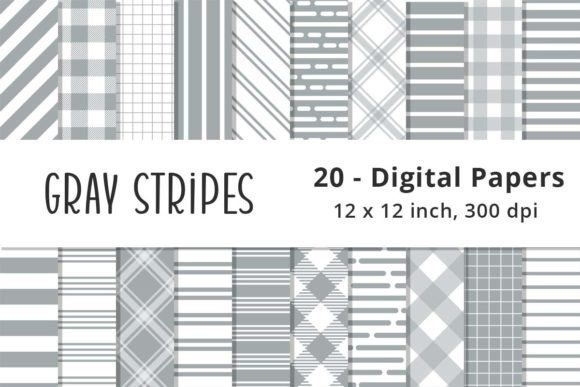
Gray Stripes Digital Pattern Backgrounds: Strategic Use for Design and Productivity
Gray Stripes Digital Pattern Backgrounds offer a versatile solution for creators, designers, and professionals looking to enhance their digital projects with clean, structured visuals. These high-quality seamless patterns feature a range of stripe variations—grid, graph, gingham, plaid, buffalo, diagonal, horizontal, vertical, and more—all in gray and white tones. Designed for 12 x 12 inch use at 300 dpi, they are ideal for digital scrapbooking, backgrounds, wallpaper, borders, planner pages, journal papers, cards, invitations, fabric designs, tumbler wraps, and more. With 20 high-quality JPG files included, this pack is a practical resource for anyone seeking consistency, professionalism, and visual appeal in their design work.
Why Gray Stripes Digital Pattern Backgrounds Matter in Design
In the world of digital design, background patterns play a critical role in setting the tone, enhancing readability, and supporting brand identity. Gray Stripes Digital Pattern Backgrounds provide a neutral yet structured foundation that can elevate the aesthetic of any project without overwhelming the content. Their simplicity makes them adaptable to a wide range of uses, from professional presentations to personal creative endeavors.
The strategic use of these patterns can help maintain focus on key elements by creating a subtle texture or structure that guides the eye. This is particularly useful in digital planners, where visual organization is essential for productivity and goal tracking. The consistent color palette of gray and white ensures compatibility with most color schemes, making it easier to integrate these backgrounds into existing designs without clashing.
Key Uses and Strategic Benefits
- Digital Scrapbooking: Gray stripes add a refined texture that complements photos and text without distracting from the main content.
- Planner Pages: The structured nature of grid and graph patterns supports task management and time tracking.
- Backgrounds and Wallpapers: The neutral tones make these patterns suitable for both modern and traditional aesthetics.
- Printable Papers and Cards: The versatility of these patterns allows for easy customization and personalization.
- Branding Materials: A consistent pattern across marketing materials reinforces brand identity and professionalism.
By incorporating Gray Stripes Digital Pattern Backgrounds into your workflow, you can streamline your design process and ensure a cohesive look across all your projects. This not only saves time but also enhances the overall quality of your output.
Strategic Considerations for Using Gray Stripes Digital Pattern Backgrounds
While the benefits of using Gray Stripes Digital Pattern Backgrounds are clear, it’s important to approach their use with intention. Simply applying a pattern without considering its purpose or context can lead to visual clutter or misalignment with your goals. Here are some strategic considerations to keep in mind:
1. Define Your Purpose: Before selecting a pattern, ask yourself what you want to achieve. Are you aiming for a minimalist look? Do you need a structured layout for planning purposes? Understanding your objective will guide your choice of pattern and help avoid unnecessary complexity.
2. Match the Pattern to the Content: Not all patterns are suitable for every type of content. For example, a bold plaid pattern may be too distracting for a document requiring high readability, while a subtle grid pattern could be perfect for a planner page.
3. Test for Compatibility: Since these patterns are in JPG format, they are flattened raster files and cannot be edited as vectors. Ensure that they work well with your design software and that they do not interfere with other elements such as text or images.
4. Maintain Consistency: If you're using multiple patterns across different projects, consider establishing a standard or theme to ensure a unified visual identity. This is especially important for branding and long-term projects.
5. Evaluate Long-Term Value: Think about how these patterns will be used over time. Will they support future projects? Can they be easily adapted or updated if needed?
Practical Examples of Application
Consider a small business owner who wants to create branded stationery for their company. By using Gray Stripes Digital Pattern Backgrounds, they can ensure a cohesive look across all printed and digital materials—from letterheads to social media graphics. The neutral tones allow for flexibility in color choices while maintaining a professional appearance.
For an educator designing digital lesson plans, the grid and graph patterns can help organize information in a way that is visually engaging and easy to follow. This can improve student engagement and comprehension, especially when combined with clear headings and bullet points.
Freelancers working on client proposals might find the buffalo or gingham patterns useful for adding a touch of personality to otherwise formal documents. These patterns can help differentiate their work while still maintaining a sense of professionalism.
Risks of Using Gray Stripes Digital Pattern Backgrounds Without Strategy
While Gray Stripes Digital Pattern Backgrounds are highly versatile, there are risks associated with using them without a clear strategy. One common pitfall is overusing patterns, which can lead to visual fatigue and reduce the effectiveness of your message. It's important to strike a balance between adding visual interest and ensuring that the content remains the focal point.
Another risk is choosing the wrong pattern for the right purpose. For instance, using a busy plaid pattern in a presentation might make it harder for the audience to focus on the key points. Similarly, using a simple horizontal stripe in a complex design could make it appear flat or uninteresting.
Additionally, relying too heavily on one pattern without variation can limit creativity and prevent the development of a unique visual identity. While consistency is important, it's also valuable to experiment with different patterns to find what works best for your specific needs.
To avoid these risks, it's essential to approach the use of Gray Stripes Digital Pattern Backgrounds with a thoughtful, goal-oriented mindset. This means understanding your audience, defining your objectives, and selecting patterns that align with both.
How to Approach Integration with Confidence
If you're new to using digital patterns, start by experimenting with a few options to see what works best for your projects. Begin with simpler patterns like grids or horizontal stripes and gradually introduce more complex ones like gingham or plaid as you become more comfortable with their impact.
It's also helpful to consult with other designers or join online communities to gain insights into best practices and innovative uses of digital patterns. Learning from others can help you refine your approach and discover new ways to incorporate Gray Stripes Digital Pattern Backgrounds into your work.
Finally, always test your designs before finalizing them. Check how the patterns look on different screens, print sizes, and under various lighting conditions. This will help ensure that your designs remain effective and visually appealing across all platforms.
By taking a strategic and intentional approach, you can maximize the value of Gray Stripes Digital Pattern Backgrounds and use them to achieve better results in your creative and professional endeavors.